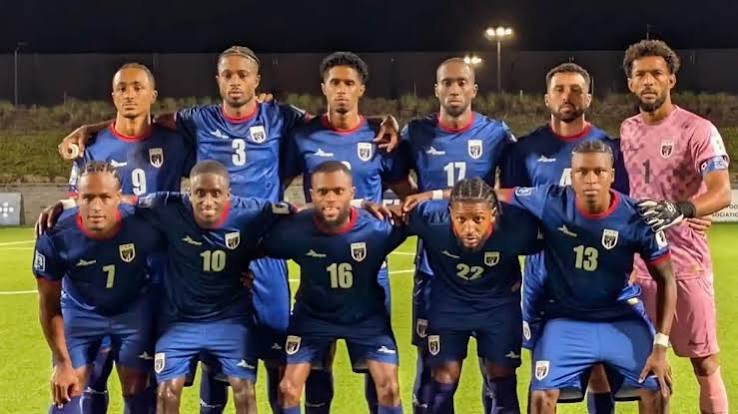
The world did not see them coming. When the 2026 FIFA World Cup kicked off under the bright lights of North America, attention was fixed as always on the giants. Argentina, Germany, Spain, France, Brazil, England and perhaps the regrettable and conspicuous absence of the Azuris. Those are nations with notable football history, pedigree and expectations. Somewhere far from the spotlight, almost as an afterthought in many previews, stood a small island nation in the Atlantic Ocean—Cape Verde.
For them, just qualifying was history. A country of barely half a million people had dared to step onto football’s biggest stage for the very first time. There were no loud declarations, no promises of glory. Only quiet determination, a tightly bonded squad and a dream that felt too big to say out loud.
But from the very first whistle, it became clear that, Cape Verde had not come to participate. They had come to compete. Drawn into a difficult group, many predicted a swift exit. Yet match after match, Cape Verde refused to bend. Against Spain, they stood like a wall, organized, disciplined and fearless. The game ended goalless but it felt like a victory. The world began to take notice.
Then came Uruguay. A team rich in World Cup history, known for their grit and attacking bite. But Cape Verde matched them stride for stride. When Uruguay scored, Cape Verde answered. When pressure mounted, they resisted. The 2–2 draw was not luck, rather it was belief taking form.
By the time they held Saudi Arabia to another draw, something remarkable had happened. Without winning a single match, Cape Verde had achieved what many thought impossible, they had qualified for the knockout stage without winning or losing a single game. The smallest nation ever to do so. But their story was only just beginning.
The Round of 32 brought a matchup that felt almost cruel in its imbalance, Cape Verde versus Argentina. The defending champions. A team led by one of football’s greatest icons, Lionel Messi. To most, it was the end of the road. Yet on that unforgettable night, Cape Verde played as if history had no power over them.
Argentina struck first, as expected. But Cape Verde did not collapse. They responded, with courage, with precision and with defiance. An equalizer stunned the stadium. Argentina pushed again and again, Cape Verde answered. Every attack met resistance and every moment of brilliance matched with resilience. What unfolded was not just a football match, it was a rebellion.
Cape Verde refused to accept the script. They forced Argentina into discomfort, into mistakes and into doubt. The game stretched into extra time and for a moment, a breathtaking, fragile moment, it felt as though the impossible might happen. But football, cruel as it can be, delivered its final twist. A late own goal broke the hearts of millions. Argentina edged through, 3–2 win. Cape Verde had lost the match but they had won something far greater. As the final whistle blew, the world rose in applause. Not out of sympathy but out of respect. They had taken the champions to the brink. They had redefined what was possible. They had made the world believe.
Back home, the islands erupted. Streets filled with celebration, not mourning. Flags waved from rooftops, cars and balconies. Across Europe and beyond, the Cape Verdean diaspora stood taller. For the first time, many felt seen, not just as individuals, but as a nation with a voice on the global stage. The players returned as heroes, but more importantly, as symbols. The veteran goalkeeper who defied age. The defenders who turned pressure into pride. The attackers who played without fear. And behind them all, a coach who had dared to dream differently.
Cape Verde’s journey was never about lifting the trophy. It was about shifting the narrative. And in doing so, they lit a fire across Africa. This is because their story was not just theirs alone. It was a message. A message to every so-called “small” nation that greatness is not measured by population or reputation. A message to African football that the future does not belong only to traditional powerhouses. That with structure, unity and belief, new contenders can rise. Across the continent, academies took notice. Young players saw themselves in Cape Verde’s courage. Federations began to rethink, to rebuild and to believe.
The evolution was already underway. African teams were no longer just physical and passionate, they were organized, tactical and fearless. Cape Verde had shown that discipline could stand toe-to-toe with brilliance. And so, the question began to change. Not “Can an African team compete?” But “When will an African team win it all?” Morocco had opened the door years earlier. Cape Verde had pushed it wider. Somewhere, in a dusty pitch in Lagos, Dakar, Accra, or Praia, a young boy or girl now kicks a ball with a different kind of dream, not just to play, but to conquer.
Yes, in 2026, a small island nation stepped onto the world stage and proved something unforgettable: That football does not belong to the powerful. It belongs to the brave. Bravo our boys from island.