
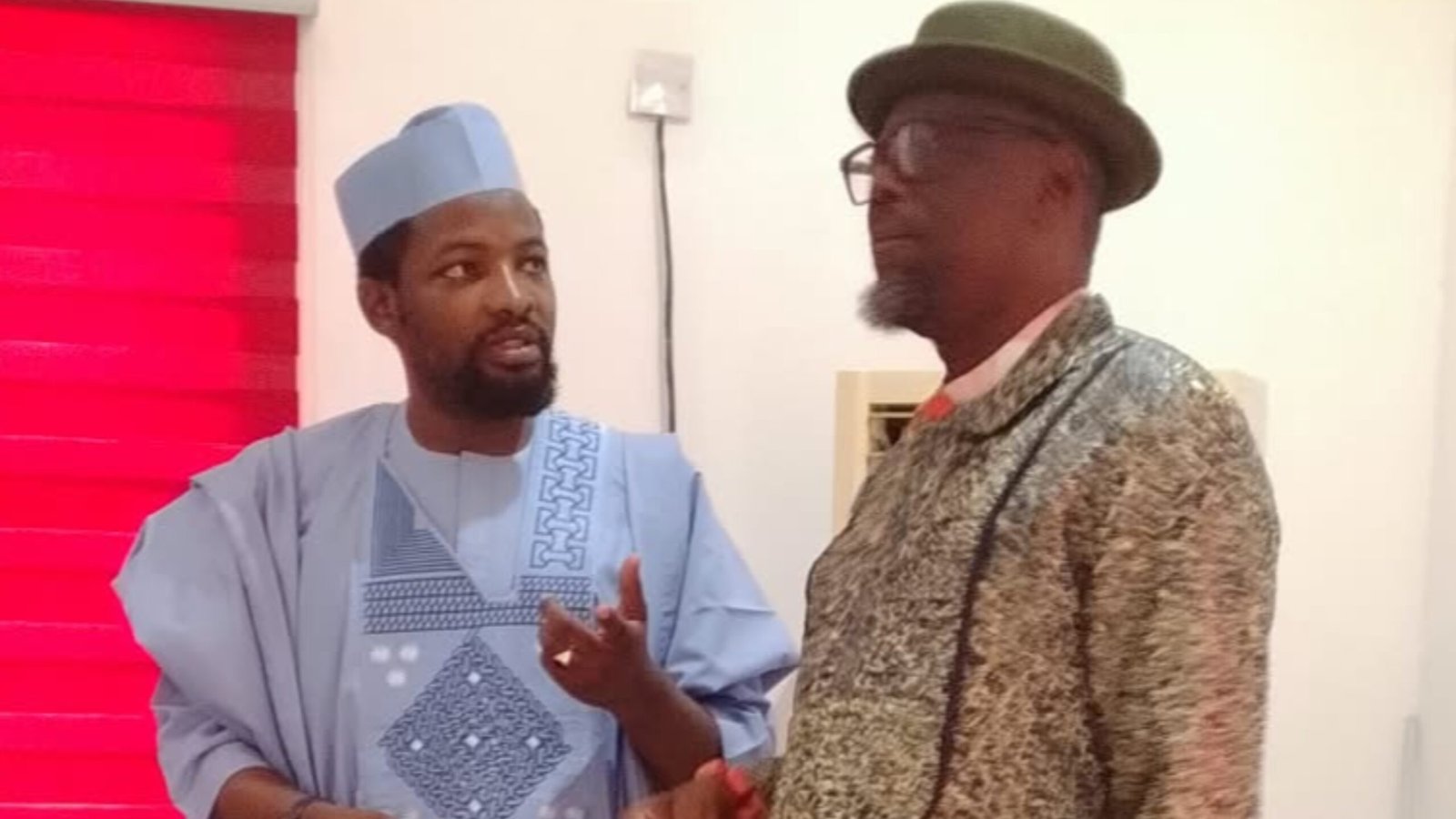
Nigeria’s quest to make compressed natural gas (CNG) a more affordable and accessible alternative to conventional transportation fuels received renewed attention in Abuja on Wednesday, October 21, 2026, as industry leaders, organised labour and other stakeholders called for practical solutions to the infrastructure, financing and supply challenges slowing its wider adoption.
At the centre of the discussions were Alh. Faruk Abdullahi, National Chairman of the National Compressed Natural Gas Forum (NCNGF) and Dr. Billy Gillis-Harry, National President of the Petroleum Products Retail Outlets Owners Association of Nigeria (PETROAN). Both leaders underscored the need for collective responsibility, stronger investment and coordinated action to ensure that Nigeria’s natural gas resources translate into tangible economic benefits for citizens.
The National CNG Adoption Conference, themed “Strengthening the National CNG Adoption and Mobilisation Agenda,” was organised in collaboration with the Presidential Initiative on Compressed Natural Gas and Electric Vehicles (Pi-CNG & EV), NCNGF, PETROAN and other stakeholders. The gathering provided an opportunity for stakeholders across the petroleum, gas, transportation and related sectors to examine the realities confronting CNG adoption and identify measures capable of accelerating progress.
For Alh. Faruk Abdullahi, who gave the opening address, the challenge extends beyond persuading Nigerians to embrace an alternative fuel. It involves building an industry that can deliver reliable supply, affordable conversion services, accessible refuelling infrastructure and the safety standards necessary to earn public confidence. As National Chairman of NCNGF, Abdullahi occupies a strategic position in efforts to coordinate the interests of businesses operating across the CNG value chain. The Forum brought together participants involved in vehicle conversion, gas distribution, refuelling infrastructure, equipment supply, fleet operations and other related services. Its work centres on advocacy, industry coordination, capacity development and the creation of an environment in which CNG can become a practical option for more Nigerians.
In his address, Abdullahi argued that the success of the national programme could not depend on government action alone. Neither conversion centres, gas suppliers nor infrastructure developers could independently overcome the challenges facing the sector. He therefore, called for a shared commitment involving government, organised labour, transport unions, professional associations, private-sector operators, financiers and Nigerians whose livelihoods depend on affordable and reliable energy.
Abdullahi also placed the discussion within the broader economic realities confronting households and businesses following the removal of the petrol subsidy. With transportation and operating costs putting pressure on consumers and commercial operators, he argued that Nigeria needed sustainable alternatives capable of reducing exposure to conventional fuel costs and improving economic productivity. He further cautioned, that the country’s natural gas resources would not automatically guarantee widespread adoption. As motorists, he maintained, would be more willing to convert their vehicles when CNG was accessible, affordable, safe, reliable and economically beneficial. This position captured one of the conference’s central concerns, which is the difference between promoting an alternative fuel and creating the conditions necessary for people to use it confidently.
Dr. Billy Gillis-Harry on the other hand, brought the perspective of the downstream petroleum retail sector to the discussion. As PETROAN president, he represents an industry whose members operate at the point where fuel distribution meets consumer demand. Their experience in retail operations, supply arrangements and the economics of fuel distribution makes their participation important to efforts to expand access to alternative fuels. He described CNG adoption as a serious national issue requiring collective action. He urged stakeholders to examine the complaints and operational difficulties confronting the programme and work towards solutions that would make the initiative effective.
Dr. Billy further expressed support for CNG adoption, noting that participants broadly agreed on its potential as an alternative fuel. He also drew attention to inadequate funding, insufficient infrastructure and the need for training, stressing that stakeholders must work with government to address these constraints and expand adoption across the country. His contributions reinforced the importance of engaging petroleum marketers in the transition. With appropriate investment and a workable commercial environment, existing retail-sector experience could help support the development of alternative-fuel infrastructure and broaden access for motorists and transport operators.
The significance of Abdullahi’s and Gillis-Harry’s interventions lies in the complementary positions they occupy. One brings the perspective of an industry platform focused on developing and coordinating the CNG evolution, while the other brings the experience of petroleum retail operators navigating the realities of fuel distribution and consumer demand. Together, their contributions point towards a transition that must be commercially viable as well as environmentally and economically desirable.
The conference also heard from Adaugo Uzogara, Conversion Manager of the Presidential Initiative on Compressed Natural Gas and Electric Vehicles, who provided an update on the programme’s infrastructure and conversion efforts. According to her, the initiative had established more than 500 vehicle conversion centres and over 90 refuelling stations across 25 states since its launch in May 2023. She also highlighted the direct and indirect employment opportunities associated with the programme and expressed optimism that continued collaboration would support its expansion to all 36 states.
The figures offered an indication of progress but the broader discussions showed that the existence of conversion centres and refuelling facilities does not, by itself, resolve the challenges experienced by prospective users. Their practical value depends on geographic coverage, reliable gas supply, affordable services and the capacity to meet growing demand.
Spicing the dialogue further, Amaoge Chukwudi, National Treasurer of the Petroleum and Natural Gas Senior Staff Association of Nigeria (PENGASSAN), drew attention to these supply and investment concerns. She said the gap between demand and available CNG supply was contributing to queues at refuelling stations, despite stakeholders’ support for the programme. Chukwudi also highlighted the high cost of establishing CNG stations, arguing that the financial burden could discourage potential investors. She called on government to consider incentives that would attract investment and help address the infrastructure deficit.
Her intervention added an important labour and industry perspective to the conference. While the adoption of CNG presents opportunities for employment and economic activity, those benefits will remain constrained if investment in supply and distribution infrastructure fails to keep pace with demand.
Other contributions from the transport sector reflected the difficulties operators face on the ground. Concerns reported from the conference included limited refuelling options on major routes, long queues at busy stations, maintenance difficulties affecting some vehicles fitted with conversion equipment and the high cost of financing.
Transport representatives also raised questions about access to specialised financing for the sector. Commercial transport operators often have to contend with lending costs that make major investments in vehicles, conversion equipment and related infrastructure difficult to undertake. These concerns underline the need to look beyond the initial conversion of individual vehicles. For long-distance operators, fleet owners and commercial transport businesses, successful adoption depends on whether refuelling facilities are available along their routes, the extent to which maintenance services are accessible and if the investment can be financed on reasonable terms.
The discussions also highlighted the importance of technical training, proper installation and safety compliance. As more vehicles are converted and infrastructure expands, the availability of qualified technicians and reliable after-sales services will be essential to protecting users, maintaining equipment and building confidence in the technology. Public awareness is also factored very important measure in this drive. As motorists and transport operators need clear information about conversion requirements, operating costs, refuelling arrangements and safety standards. Such information can help potential users make informed decisions rather than relying on assumptions about the benefits or risks of switching to CNG.
Taken together, the contributions from Abdullahi, Gillis-Harry, Uzogara, Chukwudi amongst others presented a picture of a sector with considerable potential but significant practical obstacles. They also demonstrated that addressing those obstacles requires input from several parts of the energy and transportation industries. For NCNGF, the priority is to strengthen coordination across the CNG value chain and encourage practical commitments from the organisations involved. For PETROAN, the discussion highlights the importance of bringing petroleum retail operators into the development of alternative-fuel markets. Pi-CNG & EV, meanwhile, has a central role in advancing the programme and coordinating efforts to expand conversion and refuelling capacity.
The conference’s wider message was that Nigeria must move from broad support for CNG adoption to measurable progress in infrastructure, financing, supply and service delivery. This implies that, the Government, investors, gas suppliers, petroleum marketers, conversion operators, financial institutions, organised labour and transport unions all have roles to play.
In all, the success of the CNG initiative will be determined by the difference it makes to Nigerians. It will be assessed by whether or not motorists can refuel without unreasonable delays, the extent to which conversion is financially accessible, whether or not commercial operators can maintain their vehicles and if the promised economic benefits actually reach businesses and households. The Abuja conference brought those questions into sharp focus. Through their respective interventions, Alh. Faruk Abdullahi and Dr. Billy Gillis-Harry reinforced the need for sustained collaboration, while some others highlighted the programme’s reported progress and the persisting infrastructure and supply constraints.
The task ahead is to convert these discussions into practical action. As Nigeria’s natural gas resources provide a significant opportunity and realising that opportunity will depend on dependable supply, affordable financing, adequate infrastructure and a coordinated commitment to delivering results.