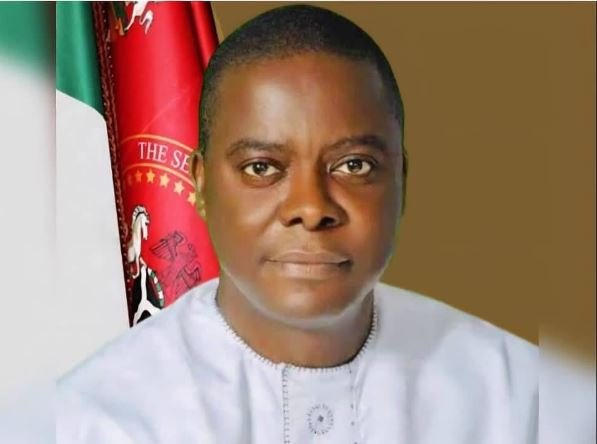
The life of Okey Ezea in Nigeria’s Red Chamber was marked by conviction, independence and an unwavering belief in principled leadership. A trained lawyer with a deep understanding of constitutional order, he entered the Senate carrying not just the mandate of his constituents in Enugu North Senatorial District, but also a reputation for candor and intellectual rigor. From the very beginning of his tenure in the 10th National Assembly, he distinguished himself as a lawmaker who would not be easily swayed by political currents or partisan convenience.
In the chamber, Ezeah was known for his directness. He spoke deliberately, often grounding his arguments in legal reasoning and democratic ideals. At a time when alliances and shifting loyalties shaped much of the political atmosphere, he chose the more demanding path of independence. His interventions on the floor reflected his concern for transparency, fiscal discipline and the protection of institutional integrity. Whether debating national policy or scrutinizing executive proposals, he carried himself with a seriousness that underscored his belief that public office was a sacred trust.
Yet his service was not confined to legislative debate. Back home in Enugu North, he remained deeply connected to the people who sent him to Abuja. He listened to community concerns about infrastructure, youth unemployment, education and rural development. He attended town hall meetings, engaged traditional and community leaders and sought ways to channel federal attention to the needs of his district. For many constituents, he was not a distant figure cloaked in the privileges of office but a familiar presence who understood their aspirations and frustrations.
The news of his death came as a profound shock. For colleagues who had worked alongside him and for constituents who had placed their hopes in his leadership, the loss felt sudden and heavy. Tributes poured in from across political divides, reflecting the respect he commanded even among those who disagreed with his positions. In death, as in life, he inspired reflections on courage, integrity and the demands of public service.
His burial drew a cross-section of who-is-who in the society: including political leaders, traditional authorities, community elders, party members and ordinary citizens. It was a moment of collective mourning, but also one of solemn recognition of a life lived in commitment to public ideals. Eulogies spoke of his strength of character, his principled stance in moments of pressure and his refusal to compromise values for expediency. Stories were shared of his generosity, his discipline and his loyalty to his roots.
For the people of Enugu North, his passing created more than emotional grief, it left a tangible void. Representation is deeply personal in a democracy and many had seen in him a reliable advocate who would articulate their concerns at the national level. His absence is felt in conversations about leadership and in the quiet recognition that a distinctive voice in the Senate has been silenced.
Still, the measure of his life does not end with his burial. It endures in the standards he set and in the memory of a senator who believed that power must be exercised with accountability and courage. As his constituency moves forward, the memory of Okey Ezea remains woven into its political narrative, a reminder that leadership, at its best, is rooted in conviction and service. Rest in peace Distinguished Senator.