I have deep affection for my elder brother and friend, Mr. Emeka Okeke, fondly known in school then as Mokomo. Though he was a lively noise-maker, he was also a cheerful and kind-hearted soul. Mokomo, I hail you. Among the Juniorate class of ’88, I hold him in high regard as one who corrected juniors without resorting to the use of cane (ikpe akpụ).
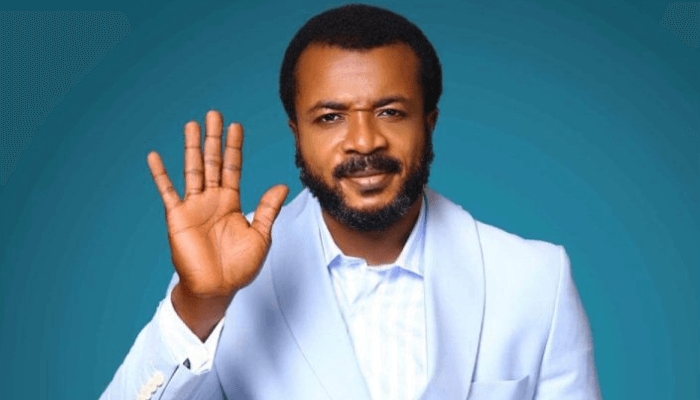
Back then, the Juniorate was its own peculiar kingdom, filled with unique characters and unforgettable memories. Recently, I found myself in heartfelt conversation with Mokomo about his new marriage, the ministry of Evangelist Ebuka Obi who is the founder of the Zion Prayer Movement Outreach (ZPMO) and the many controversies surrounding it. While Mokomo and I see things differently, his steadfast views made me pause and reflect. I decided to look beyond opinions and examine what both Scripture and the Church actually teach about such matters.
As a student of Church history, I was privileged to study under a Catholic priest who is both a professor and a man of broad theological vision, Rev. Fr. Prof. Hilary Achunike. Under him, one learned Church history as a living faith tradition, not a partisan battlefield. That formation taught me to approach issues like this one without bias, guided by history, Scripture and the Canon Law of the Church. I make this open because I wish to learn more on this matter especially from my numerous friends who are Biblical scholars, church historians, catholic clerics and in-depth researchers.
Across Nigeria’s vibrant Catholic faith, the name Evangelist Ebuka Obi provokes both devotion and debate. I’m just coming out of such debate myself and it’s not only Mokomo, my friend Fallaja Concept is also a convert but that’s by the way. Ebuka Obi’s Zion Prayer Movement Outreach evidently draws thousands weekly, filled with unmistakably Catholic devotions such as, Eucharistic Adoration, Marian prayers, fasting and the Rosary procession. Yet his precise standing within the Catholic Church structure remains undefined. Meanwhile, charismatic priests such as Fr. Ejike Mbaka and Fr. Paul Obayi face their own tensions between prophetic passion and ecclesiastical obedience. This reflection explores that delicate balance, where charisma meets canon and asks whether voices like that of Ebuka Obi might represent none rebellion, but renewal.
Few laymen in recent Catholic memory have drawn such wide engagement as Evangelist Ebuka Obi is currently doing. His ministry calls Catholics to holiness, repentance and fidelity to the sacraments. (He does not administer these sacraments, rather, catholic priests sneaks in to do so). Paradoxically, these very virtues have led some to question his legitimacy, arguing that his influence blurs the boundary between priestly and lay ministry. Yet the Code of Canon Law offers clarity. Canon 207 (1)distinguishes between clerics and laity but affirms that both are “cooperate in their own way in the mission of Christ.” Canon 225 (1) further obliges the laity “to work so that the divine message of salvation may be known and accepted by all people.”
Following this measure, Ebuka Obi’s ministry aligns squarely with the Catholic understanding of the lay apostolate, a mission that Canon Law not only permits but encourages. He does not administer sacraments nor claim priestly powers, rather, he exercises the baptized believer’s right and duty to evangelize, Canon ( 216).
To understand the Church’s caution around such zeal, one might look to Fr. Ejike Mbaka, founder of the Adoration Ministry, Enugu, Nigeria (AMEN). Charismatic and outspoken, Fr. Mbaka has inspired countless Catholics to return to prayer, confession and Eucharistic devotion. Yet his political pronouncements and prophetic fervor have repeatedly drawn ecclesiastical rebuke. Canon 287 (2) forbids clerics from active participation in partisan politics, and Canon 220 safeguards the good name of others, boundaries that zeal must respect. Nevertheless, Mbaka’s impact remains profound. His ministry recalls the prophetic fire of old which is sometimes misunderstood, sometimes misdirected, but never indifferent.
The Catechism of the Catholic Church (873–875) teaches that while priests act in persona Christi, their mission ultimately serves the evangelizing vocation shared by all believers. Mbaka’s journey illustrates how passion without discipline risks conflict, yet also how the Spirit can animate renewal when guided by obedience.
Another striking figure is Fr. Paul Obayi, popularly known as Okunerere. His ministry of deliverance, marked by exorcisms, denunciations of witchcraft and open confrontations with evil, has both captivated and unsettled many. Canon 1172 (1) insists that “no one can lawfully perform exorcisms upon the possessed unless he has obtained special and express permission from the local ordinary.” Fr. Obayi operates with such permission but under close supervision, illustrating the Church’s care that spiritual warfare never devolve into spectacle. The Catechism of the catholic church (1673) affirms the reality and necessity of exorcism when done with prudence and ecclesial authority. Fr. Obayi’s ministry thus deserves not dismissal, but discernment, its methods purified(where necessary), its mission retained.
Unlike Fr. Mbaka or Fr. Obayi, Ebuka Obi wears no cassock, holds no parish office and claims no ordination. Yet his influence is immense, booming, penetrating and persistent. This raises a theological paradox: a layman achieving what many clerics struggle to do, rekindling spiritual seriousness among Catholics. The Catholic Catechism (899–900) defines the lay vocation as a call “to seek the Kingdom of God by engaging in temporal affairs and directing them according to God’s will.” Evangelization, prayer movements, and works of piety all fall within this scope, provided they remain in communion with Church authority. Ebuka Obi’s ministry fits that vision in every illustration. He emphasizes repentance, prayer and sacramental fidelity without undermining Church teaching. His apostolate can thus be seen as a renewal of the lay charism, a visible sign that evangelization is the responsibility of the entire baptized people and not priests alone.
Yet it would be naive to ignore the broader context within which such ministries emerge. In recent decades, the Catholic Church in Nigeria and indeed across Africa, has witnessed a massive drift of her members to Pentecostal assemblies supposedly with vibrant, emotive and personality-driven men/women of God. The explosion of these churches has been fueled by their immediacy, their exuberant worship and the magnetic appeal of their “men of God.” Many Catholics, yearning for spiritual intensity and visible miracles, have found themselves drawn away. Movements like Ebuka Obi’s, deeply Catholic yet charismatically expressive, offer a bridge back to the altar. They reveal, however, the Church’s urgent need to better understand, guide and manage her gifted ministers both clerical and lay. With effective pastoral oversight, sound formation and wise accountability, such zeal can be harnessed for renewal rather than lost to rupture. For if the Church fails to shepherd her own prophets, the same spiritual hunger that drives people to Pentecostal altars may continue to empty the Catholic pews.
Moreover, Scripture repeatedly reminds us that God often raises messengers outside institutional expectations. Amos confessed, “I was no prophet, nor a prophet’s son, but the Lord took me from following the flock” (Amos 7:14–15). When the apostles tried to stop an outsider casting out demons in Jesus’ name, Christ replied, “Do not forbid him, for no one who does a miracle in my name can soon afterward speak evil of me” (Mark 9:39). The message is timeless, divine vocation is not always confined to institutional lines. The Catholic Catechism (798–801) warns against neglecting “the variety of charisms which the Holy Spirit distributes among the faithful.” The Church’s task is not to suppress these gifts, but to discern and integrate them.
To reject Evangelist Ebuka Obi outright would risk disobedience to St. Paul’s injunction in 1 Thessalonians 5:19–21: “Do not quench the Spirit. Do not despise prophecies, but test everything, hold fast what is good.” The Second Vatican Council’s Apostolicam Actuositatem (1965) urges pastors to “recognize and promote the dignity and responsibility of the laity in the Church’s mission.” Within this light, Ebuka Obi’s movement, though imperfect, may embody that call, a lay fire summoning slumbering hearts back to the altar.
Under Canon 300, lay associations bearing a Catholic character may be recognized by ecclesiastical authority if they demonstrate fidelity to doctrine and communion with pastors. Zion Prayer Movement Outreach could thus benefit from pastoral oversight, not suppression, guidance that refines, rather than extinguishes. The Church’s history shows that many reformers began as misunderstood voices. The goal is not uncritical endorsement, but prudent accompaniment, helping zeal mature into obedience and passion into purpose.
Fr. Mbaka and Fr. Obayi remind us that charisma is both a gift and a trial. The priesthood demands obedience (Canon 273), yet obedience, rightly lived, is not servitude but sanctification. Their ministries and the Church’s correction of them, demonstrate that renewal is not feared, only that it be rooted in humility and order. Evangelist Ebuka Obi, as a layman, stands on different ground but faces the same spiritual challenge, which is that, zeal must submit to truth and truth must not suffocate the zeal.
In every age, the Church wrestles with her own prophets, some burn too brightly, others too soon. The issue has never been the presence of fire, but its direction. To give Ebuka Obi a chance is not to weaken Church discipline, but to strengthen her openness to grace. For the Spirit of God still raises voices from unexpected places. The same Spirit that moved the prophets of Israel and the apostles of Galilee is not confined to the sanctuary.
As St. Paul counsels: “Let all things be done decently and in order” (1 Corinthians 14:40). Yet he also warns, “Never be lacking in zeal, but keep your spiritual fervor, serving the Lord” (Romans 12:11). Between order and zeal stands the Spirit, it is unchained, it is holy and it is alive. The Church’s mission is not to extinguish that flame, but to shape it into light.
And perhaps, in the words of Gamaliel in the Acts of the Apostles, we find our most fitting counsel:
“leave these men alone, let them go. For if their purpose or activities is of human origin, it will fail but if it is from God, you will not be able to stop them, you may even find yourself fighting against God.” (Acts 5:38-39).
_Na so I see am._