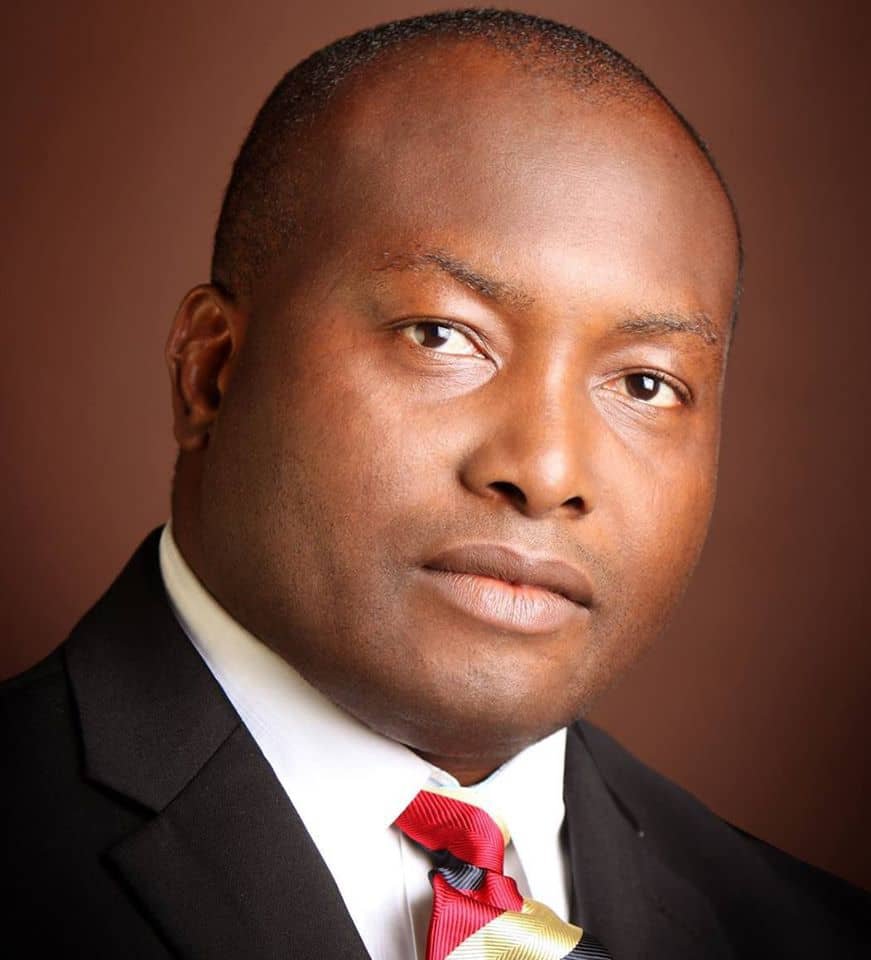
The Cathedral of Our Lady of Assumption, Nnewi, did not rise solely through architectural expertise or diocesan administration. Like many enduring sacred edifices, it emerged from faith blended with sacrifice, perseverance sustained by generosity and human labour offered reverently to God. Among those whose lives became intimately interwoven with this sacred undertaking is Late Senator Dr Patrick Ifeanyi Uba, a son of the soil whose commitment to the Church was neither ostentatious nor self-serving but grounded in conviction and duty.
To Ifeanyi Uba, the Church was not a distant institution, but a living body deserving of support and strengthening. When the vision of a cathedral for the young Diocese of Nnewi began to materialise in the early 2010s, he emerged as one of its most steadfast pillars. At various critical stages of construction, when enthusiasm faltered, resources dwindled, or progress appeared uncertain, his assistance proved decisive. Sometimes it came in the form of substantial financial support, at other times, through logistical intervention. Frequently, it came without public announcement, except that at a time, he pleaded with the bishop to refund all those who had previously made contributions towards the project. At that point, he pledged to single handedly undertake the project. In this, he exemplified the Scriptural injunction: “Let not thy left hand know what thy right hand doeth” (Matthew 6:3).
Those closely involved in the project attest that significant portions of the cathedral had already taken shape through his personal commitment long before its eventual completion. Yet he neither demanded recognition nor sought applause. African wisdom teaches that the tree which provides shade does not proclaim its generosity. In like manner, Ifeanyi Uba appeared content to entrust remembrance to God, even if human memory proved fallible.
On 27 July 2023, death brought his earthly journey to an abrupt end. His passing created a profound void, not only in the spheres of public service and enterprise but also within the Catholic community that had benefited from his generosity. Nevertheless, many assumed that when the cathedral was finally dedicated, history and gratitude would find appropriate expression in the acknowledgement of his contributions.
That long-awaited moment arrived on 14 January 2026, when the Cathedral of Our Lady of Assumption was solemnly dedicated in a grand liturgical celebration. The ceremony, held under the episcopal leadership of Most Reverend Jonas-Benson Okoye, Bishop of the Catholic Diocese of Nnewi, drew bishops, clergy, dignitaries and thousands of the faithful. Incense ascended heavenwards, prayers of consecration resounded and joy mingled with solemn reverence as the Church rendered thanks to Almighty God.
Yet amid the solemnity, an unexpected silence unsettled many hearts. As benefactors were acknowledged during the ceremony, a considerable number of worshippers listened attentively for the name of Late Ifeanyi Uba. When it was only pronounced in a passing, most people especially his ardent supporters felt he was not publicly pronounced in the manner anticipated, joy gave way to disquiet. For many, the pain lay not merely in omission but in memory itself. African philosophy holds that the departed remain alive so long as their names are spoken, to forget a benefactor is, symbolically, to consign him to a second burial.
The moment struck with particular force upon Sir James-Louis Ebube Anaedo, widely known as Ebube Anaedo, a Catholic Knight. Overcame by emotion, he wept openly within the cathedral. In an act that startled the congregation, he removed the insignia of his knighthood and voiced his lament in anguish and protest. His outcry echoed the unspoken sentiments of many: “Ifeanyi Uba, rest in peace.” Akacham!!! His action was not an attack upon the Christian faith, but a protest born of grief and a perceived moral injury.
Holy Scripture reminds us that “the stone which the builders rejected has become the head of the corner” (Psalm 118:22). To many present, the silence surrounding Ifeanyi Uba’s name felt like the rejection of a stone that had helped support the entire structure. The sense of injustice was sharpened by the knowledge that he was no longer alive to speak in his own defence.
That evening, as darkness settled over Nnewi, conscience refused repose. A group of the faithful assembled in what came to be known as Akacham:a night vigil marked by prayer, lamentation and quiet protest. Candles were lit, hymns were sung and prayers were offered for the repose of the departed. It was neither riot nor rebellion but remembrance expressed in the African idiom of communal conscience. As the elders say, he who drinks water must remember the source.
From a philosophical perspective, justice is concerned not only with rules but with recognition. Aristotle argued that injustice occurs not merely when harm is inflicted but when due honour is withheld. For those gathered that night, what was sought was neither privilege nor reward but acknowledgement, a moral duty owed to memory. Scripture itself affirms this principle: “The labourer is worthy of his reward” (Luke 10:7).
In the days that followed, explanations were offered and clarifications issued. The Diocese maintained that all contributions had been documented and that the cathedral ultimately belongs to God rather than to any individual. This position accords with Christian doctrine, for “except the Lord build the house, they labour in vain that build it” (Psalm 127:1). Yet the same tradition upholds gratitude as a sacred obligation and remembrance as an act of justice.
Today, the Cathedral of Our Lady of Assumption stands in quiet majesty over Nnewi, a place of worship, sacrifice and encounter with the Divine. Yet its walls also bear silent witness to human stories, some marked by joy, others by pain. Among these is the story of Late Senator Dr Patrick Ifeanyi Uba, whose generosity helped transform a vision into a consecrated reality.
Whether or not his name is inscribed in programmes or proclaimed at ceremonies, his legacy endures in the prayers offered within those walls and in the memories of those who know the truth of his sacrifice. African wisdom reminds us that a man truly dies only when his name is forgotten.
May his name endure and may his soul rest.
Ifeanyi Uba, rest in perfect peace.